Indoor Grown Cannabis Secrets Every Modern Cultivator Needs to Know
How to Grow Indoor Cannabis With More Control
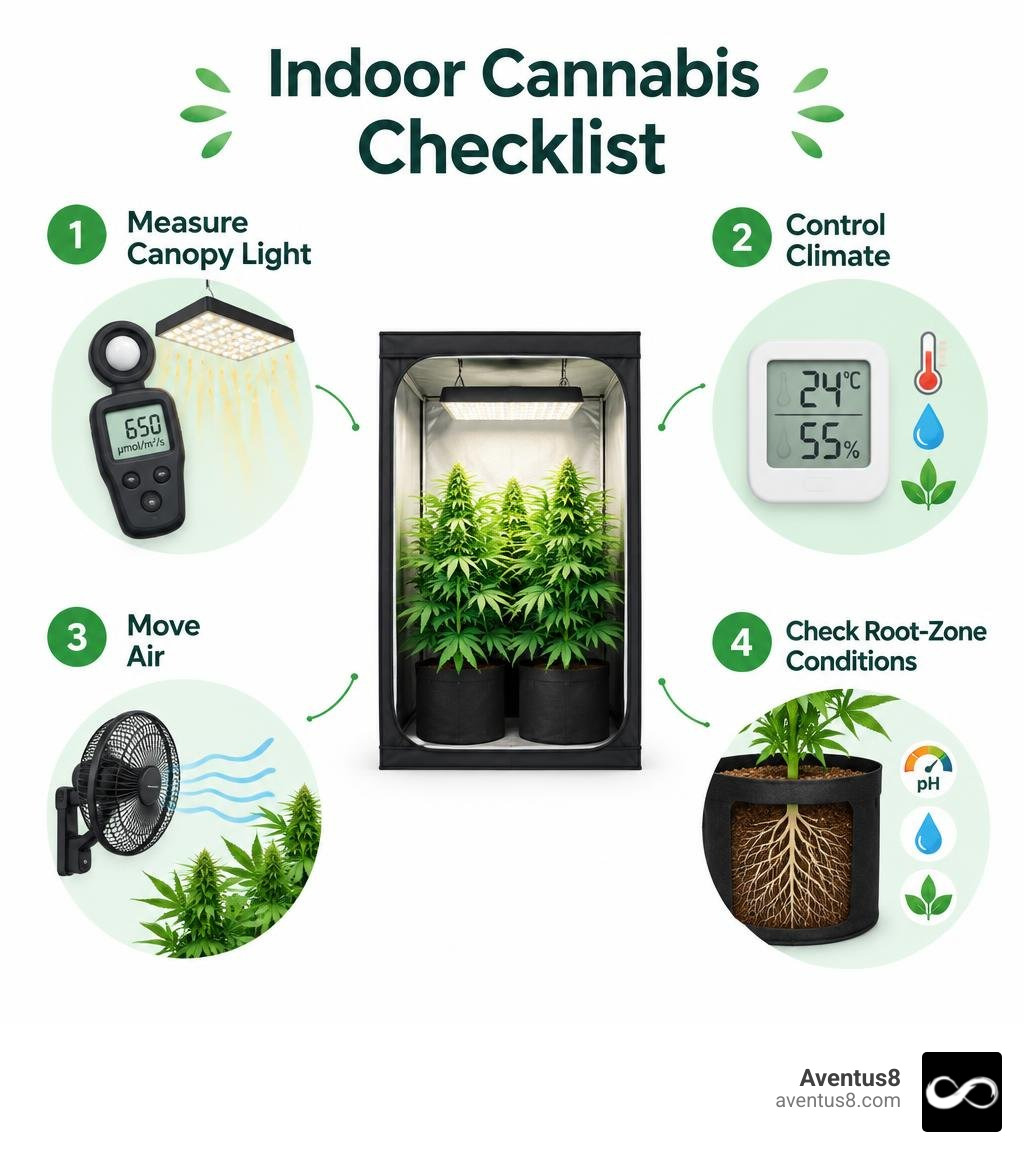
Start with the canopy, not the equipment label. Measure the light reaching the plants, keep temperature and humidity steady, and make sure air moves through the leaves without blowing hard on them. Then check the root zone: watering, pH, and nutrient strength should fit the growing medium. Change one input at a time and record how the plants respond.
Indoor grown cannabis gives you control, but it also makes you responsible for light, moisture, and air quality every day. In coastal, sub-tropical regions like Hollywood, FL, moisture control deserves special attention compared to drier grow setups across the country. Check your local cultivation laws before starting; rules differ across Florida and nationwide.
I'm Max Shemesh, founder of Aventus8 in Hollywood, FL, where my work in the legal hemp industry focuses on product quality and compliance for customers nationwide. Whether you are shopping for THC flower online, selecting rare exotic THC strains, or cultivating your own hemp flower, this guide breaks down the core measurements and cultivation choices that matter most.
Precision Environmental Control for Indoor Grown Cannabis
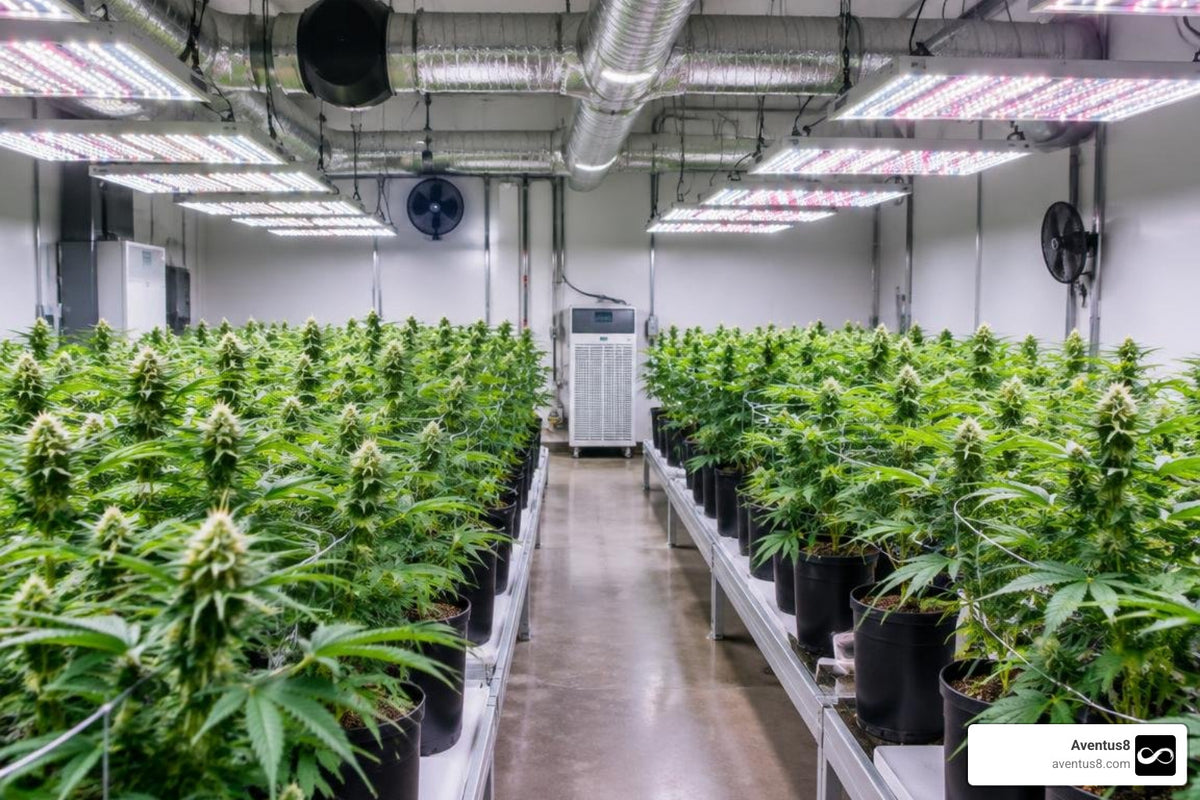
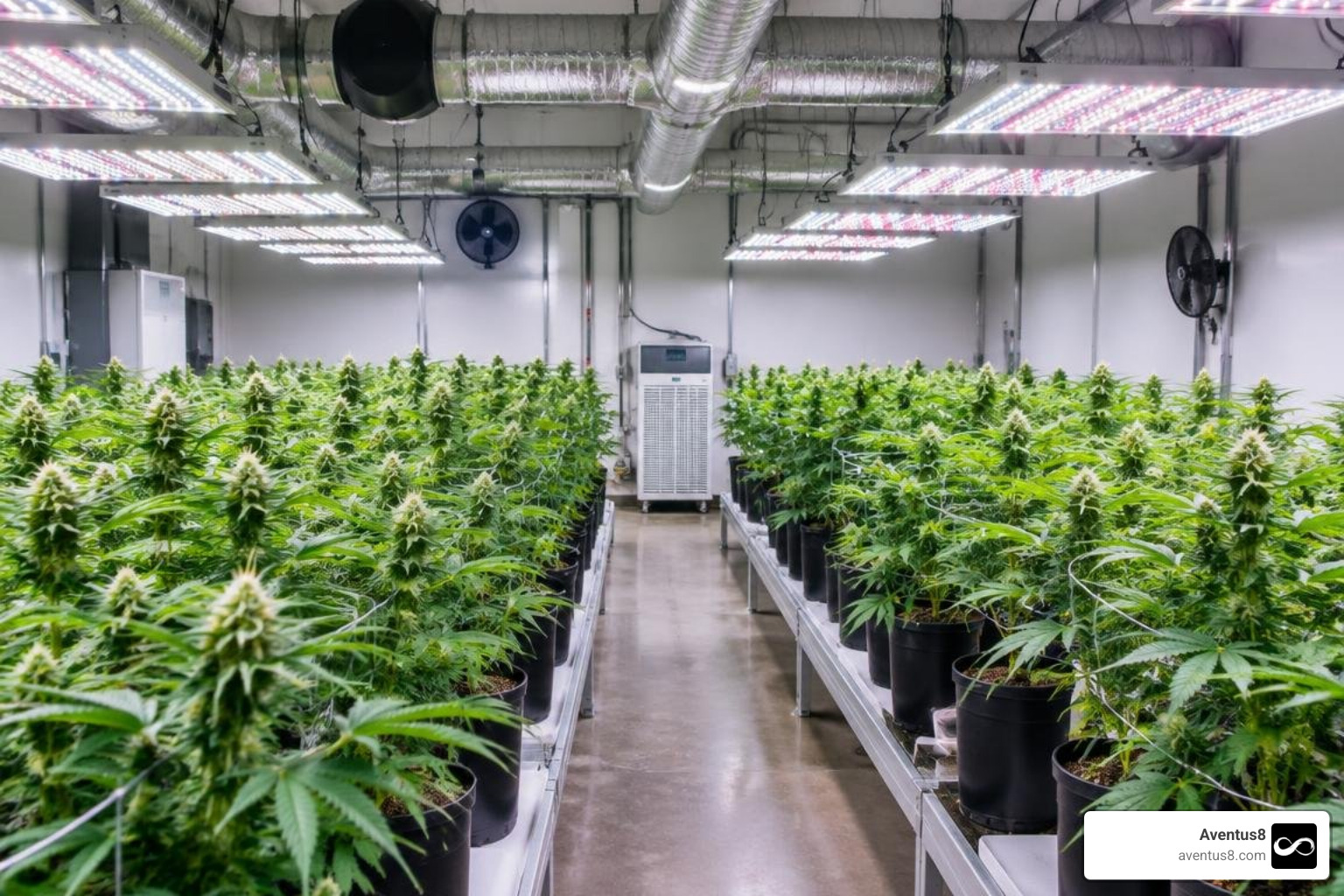
Cultivating top-shelf indoor cannabis requires shifting focus from generic gear wattage to precise plant physiology. Inside an enclosed facility, the room environment functions as an extension of the plant itself. Every millibar of atmospheric pressure, degree of heat, and micromole of light directly alters transpiration, carbon assimilation, and metabolic speed.
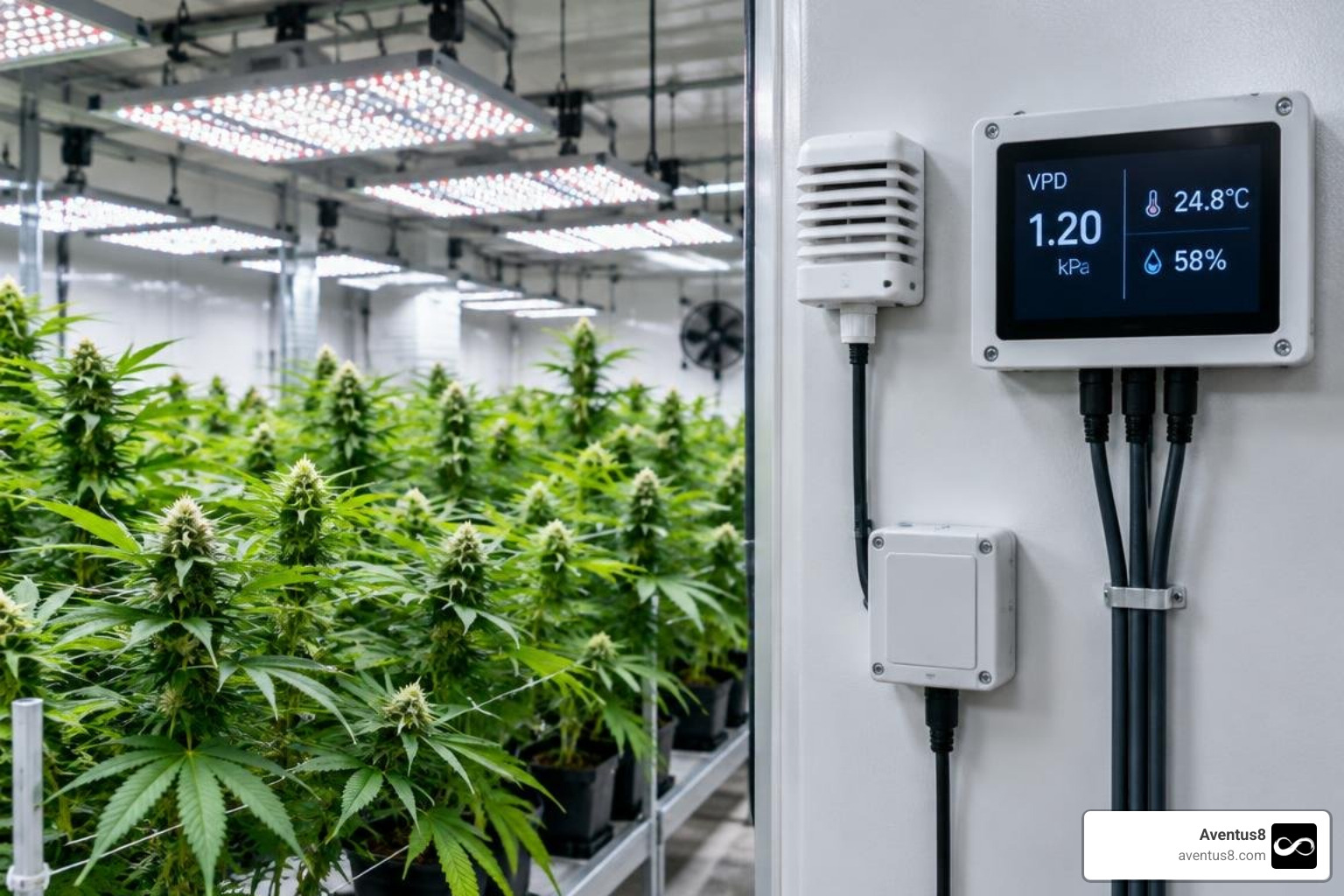
Whether you operate in the high baseline humidity of Hollywood, FL and Broward County or manage sealed environments nationwide, maintaining precision atmospheric parameters prevents stress while maximizing genetic potential.
Photosynthetic Physics: PPFD, DLI, and Elevated CO2 Dynamics
Cannabis does not respond to human lumens or raw fixture wattage; it operates strictly on photosynthetic photon flux density (PPFD) measured in micromoles per square meter per second ($\mu\text{mol/m}^2/\text{s}$). The cumulative delivery of these photons over a photoperiod represents the Daily Light Integral (DLI), measured in $\text{mol/m}^2/\text{day}$.
Research demonstrates that cannabis inflorescence dry yield increases linearly up to 1,800 $\mu\text{mol/m}^2/\text{s}$ PPFD under non-limiting conditions, yielding approximately a 1.5% increase in dry flower for every 1% increase in DLI. Agronomic assessments, such as greenhouse and indoor economic factors research, emphasize how photon capture, photoperiod strategies, and environmental stability dictate commercial viability and flower mass.
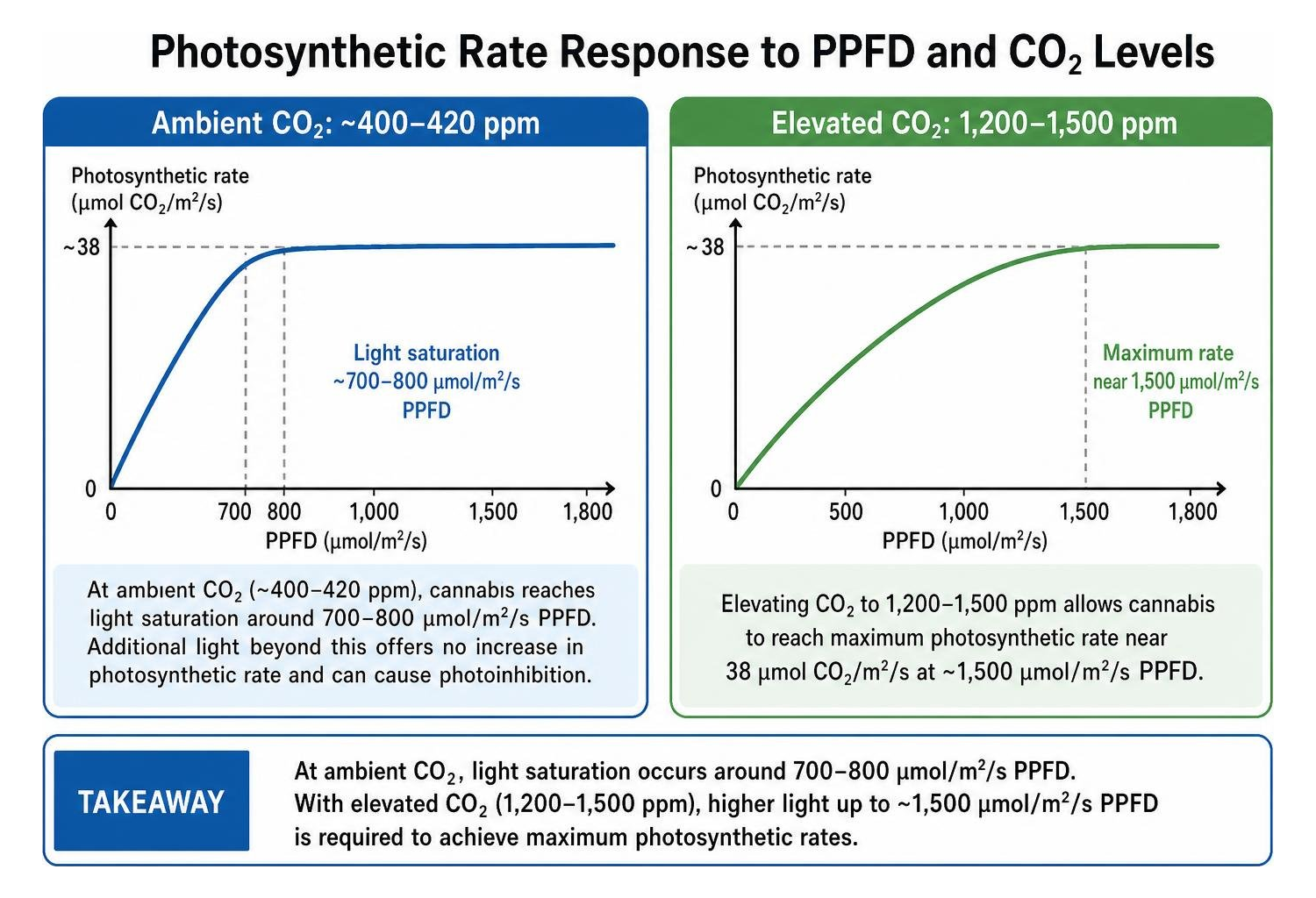
To push photosynthetic boundaries beyond ambient thresholds, growers use carbon dioxide enrichment. Ambient outdoor air registers roughly 400 to 420 ppm $\text{CO}_2$. At this baseline, cannabis reaches light saturation around 700–800 $\mu\text{mol/m}^2/\text{s}$ PPFD; any additional light without elevated $\text{CO}_2$ risks photoinhibition and chlorosis. Elevating indoor $\text{CO}_2$ concentrations to 1,200–1,500 ppm allows the canopy to achieve maximum leaf-level photosynthetic rates near 38 $\mu\text{mol } \text{CO}_2/\text{m}^2/\text{s}$ at irradiance levels reaching 1,500 $\mu\text{mol/m}^2/\text{s}$ PPFD.
Vapor Pressure Deficit (VPD), Leaf Temperature, and Boundary Layer Dynamics
Vapor Pressure Deficit (VPD)—the difference between the pressure exerted by water vapor inside the leaf's saturated internal air space and the vapor pressure of the surrounding room air—governs transpirational pull and nutrient delivery. In coastal sub-tropical climates like Hollywood, FL and controlled facilities nationwide, measuring VPD accurately requires an infrared thermometer to read actual leaf surface temperature (LST), which is frequently 2°F to 5°F cooler than ambient room air under LED lighting due to low infrared output.
Air movement directly dictates the leaf boundary layer—the microscopic cushion of still, humid air adhering to the foliage. If air velocity drops below 0.3 m/s, this boundary layer thickens, restricting transpiration and creating localized humidity pockets that welcome fungal spores. Conversely, excessive wind speeds (above 1.5 m/s) strip the boundary layer entirely, causing stomatal closure and wind burn.
Advanced Lighting Strategies: Photons, Thermal Load, and HVAC Integration
Selecting cultivation lighting requires balancing photon efficacy, spectral delivery, and HVAC loads rather than looking solely at initial hardware costs.
| Metric / Parameter | Light Emitting Diode (LED) | High-Pressure Sodium (HPS) | Ceramic Metal Halide (CMH) |
|---|---|---|---|
| Photon Efficacy ($\mu\text{mol/J}$) | 2.6 – 3.2 | 1.3 – 1.8 | 1.6 – 2.0 |
| Heat Profile | Convective (Heat sink / air) | Radiative (Direct Infrared on leaf) | Balanced (Moderate IR & convective) |
| Canopy Uniformity | Excellent (Multi-bar array) | Poor (Point-source hot spot) | Moderate to High (Wide reflector) |
| HVAC Load Dynamics | High sensible, high dehumidification | High ambient sensible heat | Moderate cooling & moisture load |
| Target Room Temp | 78°F – 84°F (due to low IR) | 72°F – 76°F (high radiant IR) | 75°F – 78°F |
Spectrum Efficacy and Fixture Selection in Indoor Grown Cannabis Setups
Modern indoor horticulture relies on multi-bar LED fixtures that distribute photons uniformly across the entire canopy footprint. Unlike single-point HPS lamps that create high-intensity centers and weak perimeters, bar fixtures offer uniform PPFD, preventing edge-canopy yield drop-off. Broad-spectrum "white" diodes supplemented with deep red (660 nm) and select far-red (730 nm) promote robust photosynthesis, accelerate phytochrome photoperiod switching, and drive flower expansion.
Managing Heat Dissipation and Microclimates in Hollywood, FL and Nationwide Facilities
Every watt of lighting delivered into a sealed room transforms into heat that must be conditioned. HPS fixtures emit abundant infrared radiation that warms the leaf surface directly, whereas LEDs dissipate heat upward via convective heat sinks.
When converting rooms from HPS to LED, ambient air temperatures must be raised 3°F to 5°F to maintain identical leaf surface temperatures and metabolic drive. In sub-tropical coastal climates like Hollywood, FL and Broward County, as well as facilities nationwide, HVAC systems must be engineered with dedicated sensible cooling capacity alongside industrial-grade dehumidification capable of extracting 100% of daily irrigation volume from the air.
Substrate Engineering and Hydrochemical Optimization
Your growing medium dictates root-zone buffering capacity, available oxygen, and corrective response speed when nutrient imbalances arise across local Hollywood, FL facilities or indoor spaces nationwide.
| Cultivation Medium | Cation Exchange Capacity (CEC) | Root Oxygenation | Correction Speed | Failure Risk Profile |
|---|---|---|---|---|
| Living Soil / Peat | Very High | Moderate | Slow (Days) | Overwatering, salt accumulation |
| Coco Coir | Moderate to High | High (Even at field capacity) | Fast (Hours to 1 Day) | Cal-Mag lockout, rapid dryback |
| Hydroponics (DWC/Rockwool) | None (Inert) | Maximum (Dissolved $O_2$ driven) | Immediate (1 Irrigation cycle) | Pump/chiller failure, rapid root rot |
Substrate Dynamics: Buffering Capacity, Oxygenation, and Failure Modes
Living soil provides a biological buffer via beneficial microbial populations and organic matter, making it forgiving for beginners. However, correcting an over-fertilized or unbalanced organic bed requires significant time.
Coco coir offers an ideal middle ground for indoor growers: high pore space ensures root oxygenation even at field capacity, while its responsive inert nature allows growers to steer crops via targeted drybacks. Inert hydroponics (such as Deep Water Culture or precision rockwool drip systems) maximize vegetative growth rates but require continuous monitoring; an uncorrected pH spike or water pump failure can damage root hairs within hours.
Advanced Hydrochemistry: EC, pH Modulation, and Cal-Mag Equilibrium
Indoor hydrochemistry revolves around electrical conductivity (EC), pH availability curves, and competitive cation balances. In municipal areas like Hollywood, FL and Broward County where tap water carries significant mineral hardness and alkalinity, reverse osmosis (RO) filtration is critical before mixing nutrients:
- Root-Zone pH Modulation: Maintain substrate runoff pH between 6.2–6.8 for soil, and strictly 5.6–6.2 for coco coir and hydroponics. Deviations outside these ranges cause phosphate precipitation or lock out micronutrients like iron and manganese.
- Electrical Conductivity (EC): Base vegetating feeds around 1.2–1.6 mS/cm, increasing to 2.0–2.8 mS/cm during peak generative flowering under high light and $\text{CO}_2$.
- Calcium-Magnesium Dynamics: Coco coir contains naturally binding cation sites that hold calcium and magnesium while releasing excess potassium and sodium. Pre-buffering coir and feeding an elevated Ca-to-Mg ratio (typically 3:1 or 4:1) prevents early-stage interveinal chlorosis and necrotic spotting across both regional South Florida grows and indoor facilities nationwide.
Canopy Architecture, Pest Exclusion, and Indoor Air Quality
Manipulating the plant canopy inside a sealed indoor grow ensures light penetrates all productive bud sites while establishing an airflow structure that minimizes fungal pathogens, particularly in humid environments like Hollywood, FL as well as commercial setups nationwide.
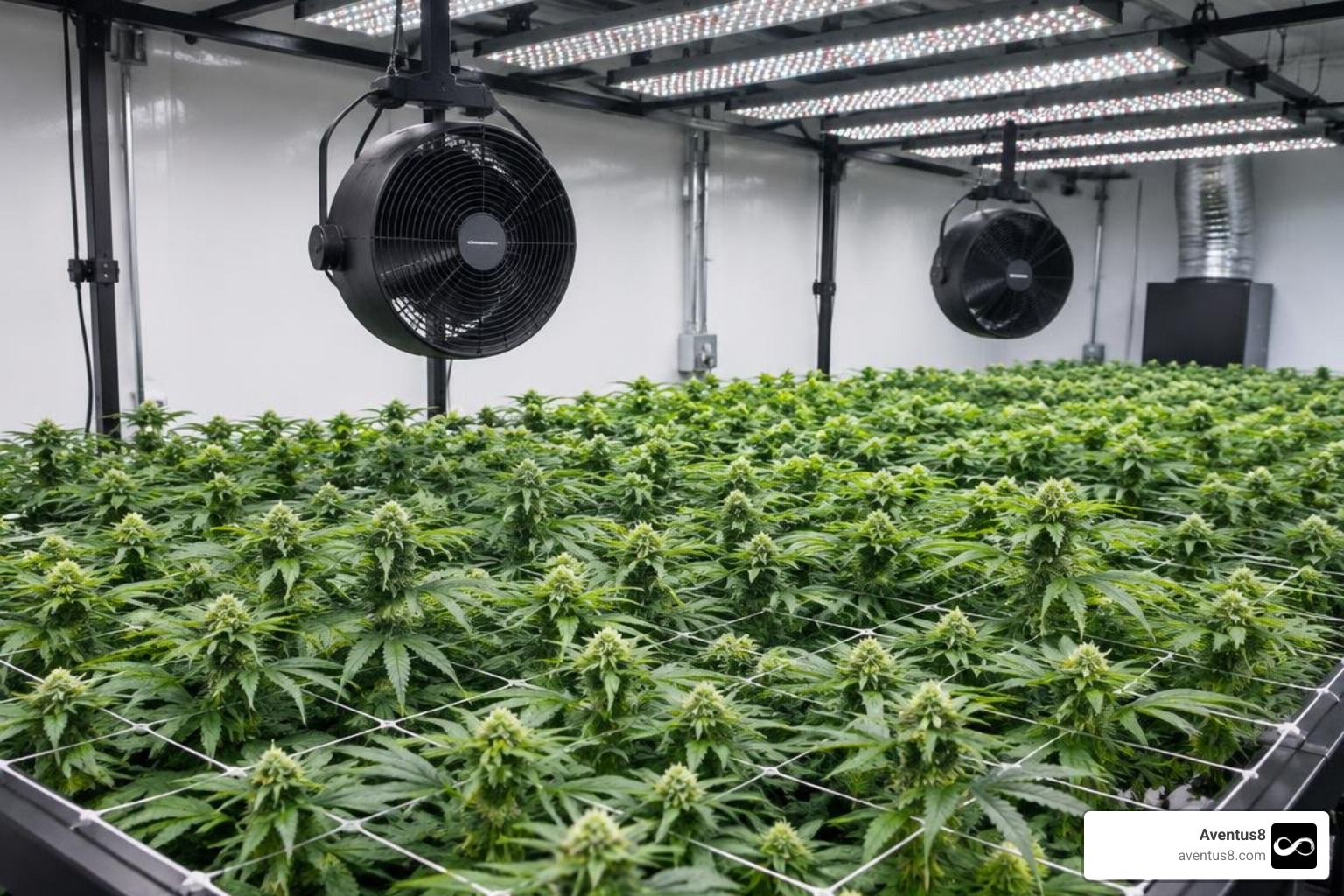
Canopy Training Methodologies: SOG, SCROG, and Airflow Dynamics in Indoor Grown Cannabis
Indoor canopies must remain flat and uniform to maximize usable light volume from overhead fixtures. Effective canopy management strategies include:
- Low-Stress Training (LST): Gently bending and securing apical shoots early in vegetative growth redistributes auxins, promoting equal lateral branch dominance.
- Topping and Fimming: Removing apical growth tips creates multiple main colas, preventing a single dominant tip from outgrowing your light footprint.
- Screen of Green (SCROG): Weaving vegetative shoots through a horizontal trellis screen (5–6 inch squares) creates an even canopy plane, delivering 800–1,000 PPFD evenly across all top flower sites.
- Sea of Green (SOG): Packing small, uniform clones tightly (up to 4–16 plants per square meter) and initiating 12/12 photoperiods after 1–2 weeks of vegetative growth produces fast, single-cola harvests.
- Strategic Lollipopping and Defoliation: Stripping the lower 30–40% of spindly growth and clearing inner fan leaves around Day 21 of flower improves lower canopy airflow, preventing powdery mildew and Botrytis (bud rot).
Air Filtration, IAQ Standards, and Biosecurity Protocols
Indoor air quality (IAQ) is critical for both plant biosecurity and human wellness. High-efficiency particulate air (HEPA) intake filters capture airborne mold spores, pests, and ambient contaminants common in South Florida's warm climate before they enter the grow environment, while heavy-duty activated carbon filters capture volatile organic compounds (VOCs) and terpenes from exhaust streams.
Indoor air quality impacts human health significantly. Because people spend about 90% of their time indoors, exposure to fine particulate matter, airborne fungal allergens, and combustion byproducts can lead to respiratory irritation and chronic conditions (Raju et al., 2020). Maintaining clean, filtered air in sealed grow rooms protects both the harvest and cultivators tending rooms in Hollywood, FL and throughout the nation.
Post-Harvest Chemistry: Debunking the Flush and Mastering Cure Science
The traditional practice of feeding plants plain water for 10 to 14 days before harvest—commonly called "flushing"—remains a widespread cultivation myth. Blind sensory and analytical trials confirm that pre-harvest mineral starvation does not reduce residual nutrient salts inside dried floral tissue, nor does it increase combustion smoothness or terpene concentration.
Mineral elements absorbed by plant tissue are locked into cellular structures and vacuoles; they cannot be "washed out" simply by withholding root-zone fertilizer at the end of the cycle.
Combustion quality and smoke smoothness depend entirely on proper post-harvest drying and curing. In high-humidity coastal climates like Hollywood, FL and controlled facilities nationwide, maintaining sealed drying rooms with dedicated cooling and dehumidification is crucial to hit classic "60/60" conditions (60°F and 60% RH) for 10 to 14 days without risking mold. This slow process facilitates enzymatic degradation of chlorophyll, starches, and harsh nitrates.
Once moisture equalizes, curing in airtight containers at water activity levels between 0.55 and 0.62 $a_w$ preserves delicate monoterpenes (like myrcene, limonene, and pinene) from oxidative degradation, guaranteeing the top-shelf standard expected by consumers in South Florida and nationwide.
Frequently Asked Questions About Indoor Cultivation
Does pre-harvest flushing increase terpene retention or smoothness?
No. Empirical studies and commercial cultivation trials across Hollywood, FL and facilities nationwide show that withholding nutrients prior to harvest does not significantly alter the elemental content of cured buds or improve terpene profiles. Smoke smoothness is determined by the gradual breakdown of chlorophyll and starches during a slow 10–14 day dry and extended cure in climate-controlled environments, rather than pre-harvest water flushes.
What is the ideal VPD range for peak vegetative and flowering stages in humid regions like Hollywood, FL?
Maintain a VPD of 0.8 to 1.1 kPa during vegetative growth (roughly 78–82°F and 55–65% RH). Transition to 1.1 to 1.3 kPa in early flowering, and tighten parameters to 1.3 to 1.6 kPa during late flowering (72–76°F and 38–45% RH) using commercial dehumidification to promote resin production while preventing bud rot.
How does elevated CO2 alter daily light integral (DLI) targets across indoor facilities nationwide?
Supplementing carbon dioxide to 1,200–1,500 ppm increases the light saturation point of cannabis, raising the optimal PPFD ceiling from ~800 to 1,500 $\mu\text{mol/m}^2/\text{s}$. This shifts target flower DLI from 35–45 $\text{mol/m}^2/\text{day}$ up to 55–65 $\text{mol/m}^2/\text{day}$, accelerating daily biomass accumulation when balanced with appropriate nutrients and room temperatures.
Conclusion
Mastering modern indoor cannabis cultivation requires viewing your grow room as an integrated biological system. By aligning photosynthetic photon delivery, precise vapor pressure deficit, balanced substrate hydrochemistry, and proactive biosecurity, you create an environment where plants reach their full genetic potential.
At Aventus8, we apply these rigorous botanical standards to our entire product lineup. Based in Hollywood, FL, we proudly provide premium, farm-bill compliant hemp-derived products to enthusiasts across South Florida and throughout the country. Enjoy free shipping and a complimentary gift on all orders over $75 nationwide—no medical card required. Explore our curated collections and stay ahead of the curve with our latest educational cultivation updates and industry news. Interested in partnering with us? Join our nationwide affiliate program to share exceptional quality while earning competitive commissions.