Article: 10mg Edible vs Blunt: Breaking Down Real Cannabis Potency
10mg Edible vs Blunt: Breaking Down Real Cannabis Potency
How Many mg of THC Are in Blunts Compared With a 10 mg Edible?
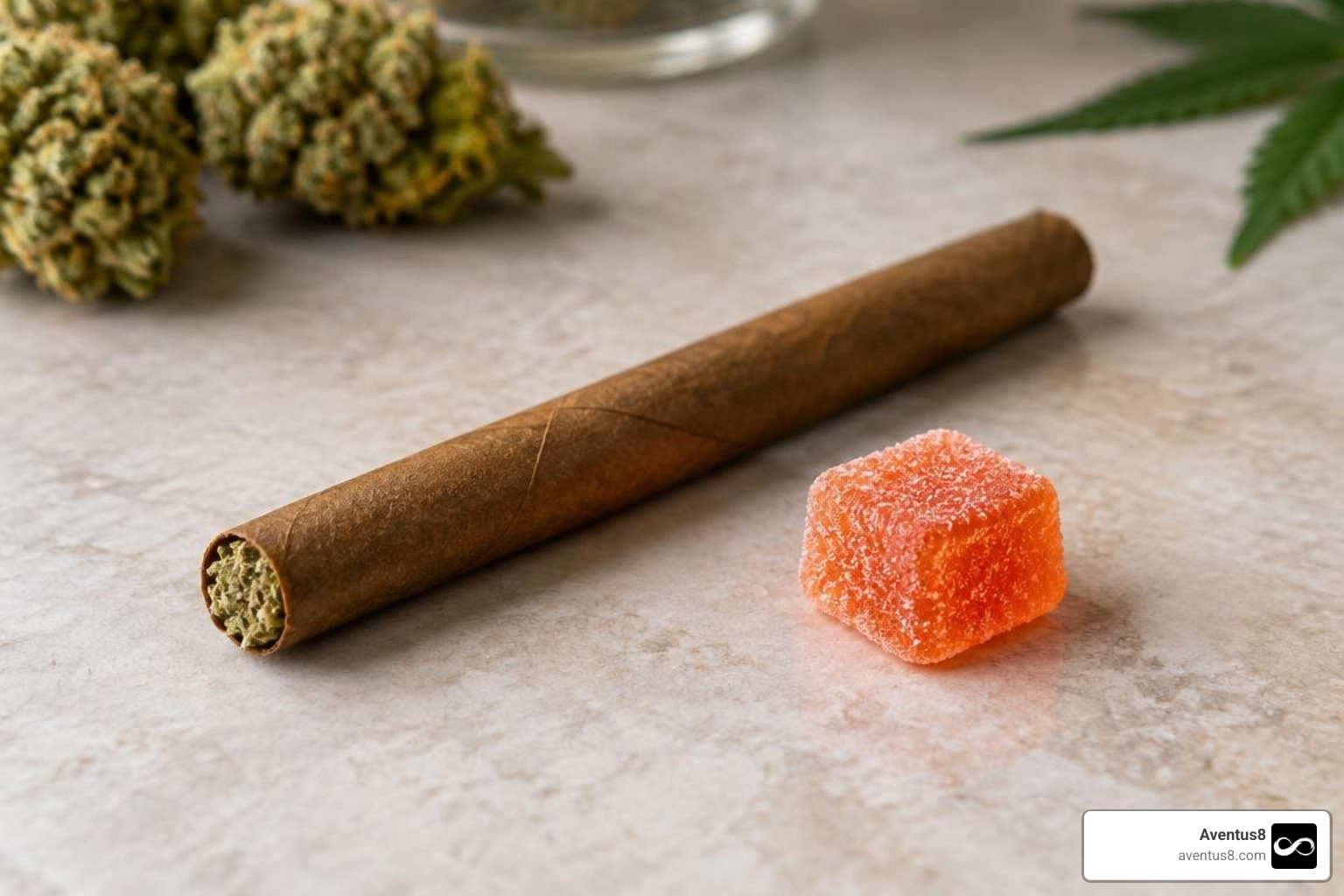
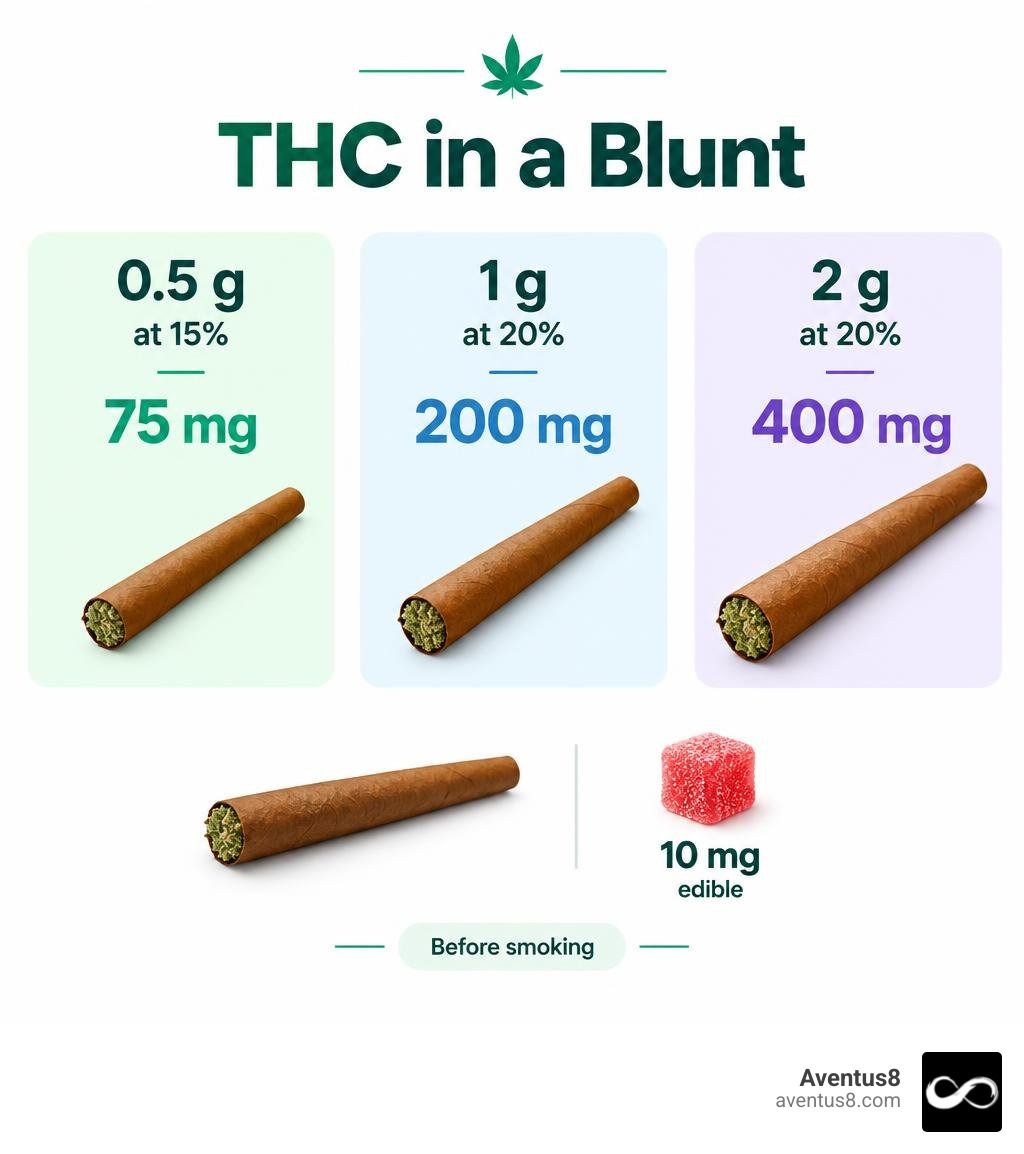
A blunt with 1 to 3 grams of flower at 15% to 20% THC contains about 150 to 600 mg of THC before smoking. A smaller, 0.5-gram blunt at 15% THC contains about 75 mg. To estimate yours, multiply the flower's weight in grams by 1,000, then by its THC percentage written as a decimal.
That total is not the amount your body absorbs: burning and smoke loss reduce the dose. It also does not make a blunt directly comparable to a 10 mg edible, which enters the body in a different way. Whether you are shopping locally in Hollywood, Florida, or ordering compliant hemp nationwide, the flower's weight and potency are the best place to start.
I'm Max Shemesh, founder and CEO of Aventus8, where our team serves customers across South Florida and throughout the country with lab-tested cannabinoid products. My hands-on experience helps me answer questions like "how many mg of THC are in blunts." Next, we'll look at what those numbers mean when you smoke a blunt rather than eat an edible.
Explore related resources on how many grams of thc are in a blunt, the essentials of THC blunts, and selecting a quality blunt wrap.
How Many mg of THC Are in Blunts: The Milligram Math
To understand how many mg of THC are in blunts, start with the raw milligram count in your roll. Whether you are rolling dry herb at home in Hollywood, FL or ordering dispensary-grade flower nationwide, a standard blunt holds anywhere from 1 to 3 grams of dry herb, which is up to three times the capacity of an average joint. When calculating how many grams of thc are in a blunt, the total weight of the flower multiplied by its cannabinoid concentration gives you the starting milligrams before lighting up.
Average flower potency has climbed dramatically over the decades, rising from around 4% in 1995 to well over 16% to 20% in modern retail selections across Florida and nationwide. Because of these higher potencies, even a modestly packed blunt contains a massive pool of cannabinoids compared to dispensary edibles.
| Consumption Format | Average Weight | Typical THC Potency | Total Starting THC (mg) | Estimated Absorbed Dose (mg) |
|---|---|---|---|---|
| Micro-Dose Edible | N/A | Precise Infusion | 2.5 mg | ~2.5 mg (via liver) |
| Standard Edible | N/A | Precise Infusion | 10 mg | ~10 mg (via liver) |
| Standard Joint | 0.5 – 1.0 g | 20% THC | 100 – 200 mg | 20 – 74 mg |
| Mini Blunt | 0.5 g | 15% THC | 75 mg | 15 – 28 mg |
| Classic Blunt | 1.0 – 2.0 g | 20% THC | 200 – 400 mg | 40 – 148 mg |
| Party Blunt | 3.0 g | 20% THC | 600 mg | 120 – 222 mg |
Calculating How Many mg of THC Are in Blunts Based on Flower Weight
To find the raw milligram count, convert the weight of your flower into milligrams (1 gram equals 1,000 milligrams) and multiply it by the lab-tested percentage. For instance, if you roll 1 gram of bud tested at 20% THC, your math is 1,000 milligrams multiplied by 0.20, resulting in 200 milligrams of total THC.
If you roll a hefty 2-gram cigarillo using high-grade 20% bud, you are packing roughly 400 milligrams of total THC into that single wrap. As detailed in this scientific breakdown of blunt THC content, the final potency scales directly with the physical density and lab strength of your chosen cultivar.
Bioavailability: How Many mg of THC Are in Blunts vs. What You Actually Absorb
Not every milligram inside the paper makes it into your bloodstream. When you ignite dry herb, high combustion temperatures instantly destroy a substantial portion of active cannabinoids via pyrolysis. Additional vapor drifts off into the room as sidestream smoke between pulls.
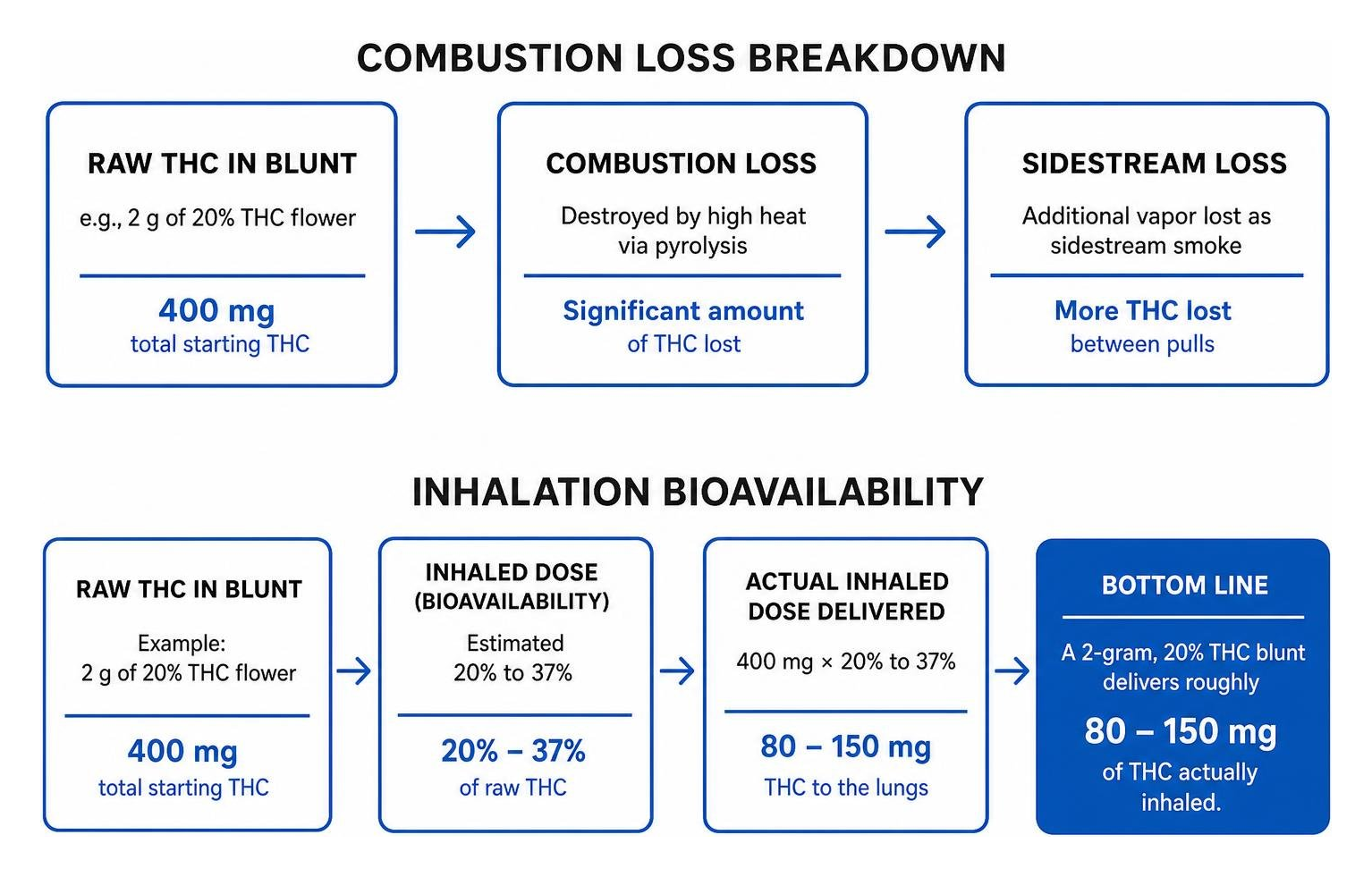
Inhalation provides an estimated bioavailability of roughly 20% to 37%. This means smoking a 2-gram blunt containing 400 milligrams of raw THC typically delivers an actual inhaled dose of roughly 80 to 150 milligrams directly to the lungs. Even with combustion losses, that single smoking session delivers substantially more active THC than an entire recreational pack of standard 10 mg gummies.
10mg Edible vs. Blunt: Comparing Ingested and Inhaled THC Potency
Comparing an edible to a blunt is not an apples-to-apples comparison because your body processes inhaled and ingested cannabinoids along entirely different physiological pathways. For consumers unwinding along Hollywood Beach or relaxing across the country, recognizing how each delivery method works is key to managing your high.
When you inhale blunt smoke, delta-9-THC diffuses across lung alveoli straight into the bloodstream, crossing the blood-brain barrier within seconds to produce an immediate peak. In contrast, an edible must pass through the digestive system and enter the liver. During first-pass metabolism, liver enzymes convert delta-9-THC into 11-hydroxy-THC, a potent metabolite that produces a noticeably heavier, longer-lasting body sensation. You can review typical onset windows across formats with a standardized weed dosage chart and research on Differences in Cannabis Impairment and its Measurement Due to Route of Administration.
The Tobacco Wrap Factor: Nicotine Synergy and Head Rush
Traditional blunt wraps are manufactured from cured tobacco leaves or reconstituted tobacco pulp. As a result, the user absorbs pharmacologically active amounts of nicotine alongside cannabinoids.
Nicotine acts as a central nervous system stimulant, releasing dopamine and constricting blood vessels. This creates a distinct "head rush" within the first few draws that works synergistically with THC. This stimulating onset often makes blunt smoke feel subjectively stronger and more intoxicating than clean rolling papers, as highlighted in this analysis of blunts vs joints vs spliffs.
Starting Dose vs. Blunt Dose: Managing Overconsumption Risks
Clinical researchers commonly designate 5 milligrams of THC as a single standardized research unit, while many medical programs advise beginners to start with a micro-dose under 2.5 milligrams. In contrast, sharing or finishing a personal blunt delivers between 80 and 150 milligrams of bioavailable THC in a single sitting.
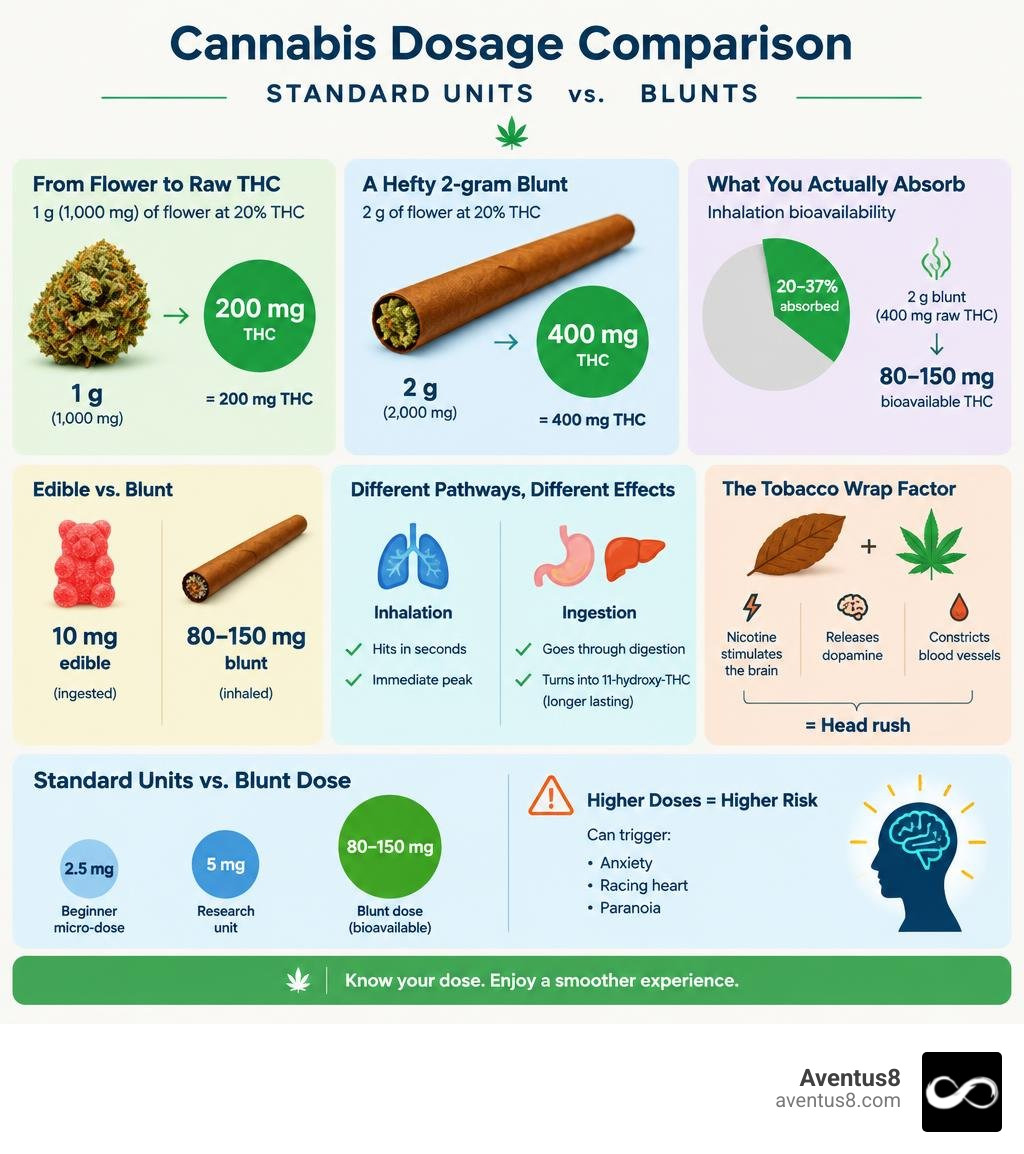
This massive surge can overwhelm low-tolerance consumers, occasionally triggering acute anxiety, racing heart rates, or paranoia. Selecting lab-tested products from our buy thc flower ultimate guide 2026 ensures you know the exact cannabinoid concentration before rolling, helping consumers in South Florida and nationwide keep every session smooth and manageable.
Drug Testing and Clearance: How Long Blunt THC Stays in Your Body
Because a single blunt introduces a large bolus of cannabinoids, it takes longer for the body to fully metabolize and eliminate the resulting byproducts. Whether you are navigating standard workplace screenings in Hollywood, FL or testing protocols nationwide, THC is highly lipophilic, meaning it readily dissolves into and stores within adipose (fat) tissue before gradually leaching back into circulation to be processed by the liver.
Metabolic clearance rates depend on your unique body mass index, overall physical activity, hydration, and natural metabolic speed. A comprehensive cannabis blunt detection window study demonstrates that the substantial milligram load from regular blunt use leads to sustained accumulation in body tissues over time.
Detection Windows: Occasional Smokers vs. Daily Users
Standard workplace screenings test for the non-psychoactive secondary metabolite THC-COOH. The time it takes for these metabolites to fall below common screening cutoffs (such as 50 ng/mL in urine) varies based on your historical frequency of use:
- Urine Testing: An occasional consumer who shares a single blunt will typically test clean within 1 to 3 days. Frequent or daily blunt smokers face detection windows ranging from several weeks up to 30 days or more due to tissue saturation.
- Saliva Testing: Oral fluid reflects very recent exposure, typically detecting active cannabinoids for 12 to 24 hours after smoking.
- Blood Testing: Blood levels spike rapidly during inhalation and decline within 2 to 12 hours as the compound redistributes.
- Hair Follicle Testing: Hair captures systemic metabolite circulation, showing a standard retrospective detection window of up to 90 days.
Harm Reduction and Healthier Consumption Alternatives
If you love the slow-burning ritual of a cigarillo but want to avoid the health drawbacks of heavy combustion and tobacco toxins, there are several straightforward harm-reduction adjustments:
- Pure Hemp Wraps: Switching to natural hemp wraps eliminates nicotine dependence and tobacco-specific nitrosamines while retaining the classic slow burn.
- Unbleached Rolling Papers: Rolling standard joints with ultra-thin rice or hemp papers minimizes overall smoke inhalation and prevents excess tar buildup.
- Dry-Herb Vaporization: Tabletop or portable vaporizers heat cured buds just below the threshold of combustion. This delivers pure cannabinoid vapor without carbon monoxide, tar, or carcinogens.
- Curated Lab-Tested Botanicals: Sourcing pure, compliant flower from our online thc flower shop gives consumers in Hollywood, FL and across the country complete visibility into clean lab profiles and precise cannabinoid metrics.
Frequently Asked Questions About Blunt THC Potency
How many milligrams of THC are in a typical 1-gram blunt?
A 1-gram blunt rolled with 20% THC flower contains roughly 200 milligrams of total THC before ignition. After accounting for combustion degradation and sidestream smoke loss (roughly 20% to 37% bioavailability), your body absorbs an estimated 40 to 74 milligrams of active THC.
Why does a blunt feel stronger than a 10mg edible?
A blunt delivers a massive, rapid payload of 80 to 150 milligrams of inhaled delta-9-THC that crosses the blood-brain barrier almost instantly, paired with the stimulant rush of wrap nicotine. A 10 mg edible delivers a much smaller, metered dose that must undergo slow liver conversion into 11-hydroxy-THC over 45 to 90 minutes.
Do hemp wraps reduce the THC delivery of a blunt?
No. Hemp wraps burn at a consistent temperature and do not alter the cannabinoid profile or active potency of the enclosed ground flower. They simply eliminate unwanted nicotine exposure, delivering the same rich cannabinoid payload with a cleaner smoke profile.
Conclusion
Understanding the raw milligram math behind your rolls gives you complete control over your cannabis experience. While a standard recreational gummy delivers a predictable 10 milligrams, a classic 1 to 2-gram blunt packs anywhere from 200 to 400 milligrams of raw THC, yielding an absorbed dose of 80 to 150 milligrams along with a brisk nicotine head rush. Knowing these distinctions allows you to dose mindfully, protect your tolerance, and choose the ideal method for your lifestyle.
At Aventus8, we make it effortless to enjoy premium, lab-certified cannabinoid selections across Hollywood, Miami, Broward County, and nationwide. All of our orders ship quickly across the U.S. with no medical card required, and we proudly offer free shipping plus a complimentary gift on all orders over $75. Whether you are stocking up locally in South Florida or across the country, explore our educational guides and best cannabis products to elevate your sessions today.