The Complete Guide to Comparing Retail Vending Machine Options
Understanding the Modern Retail Vending Machine: Features and Technology
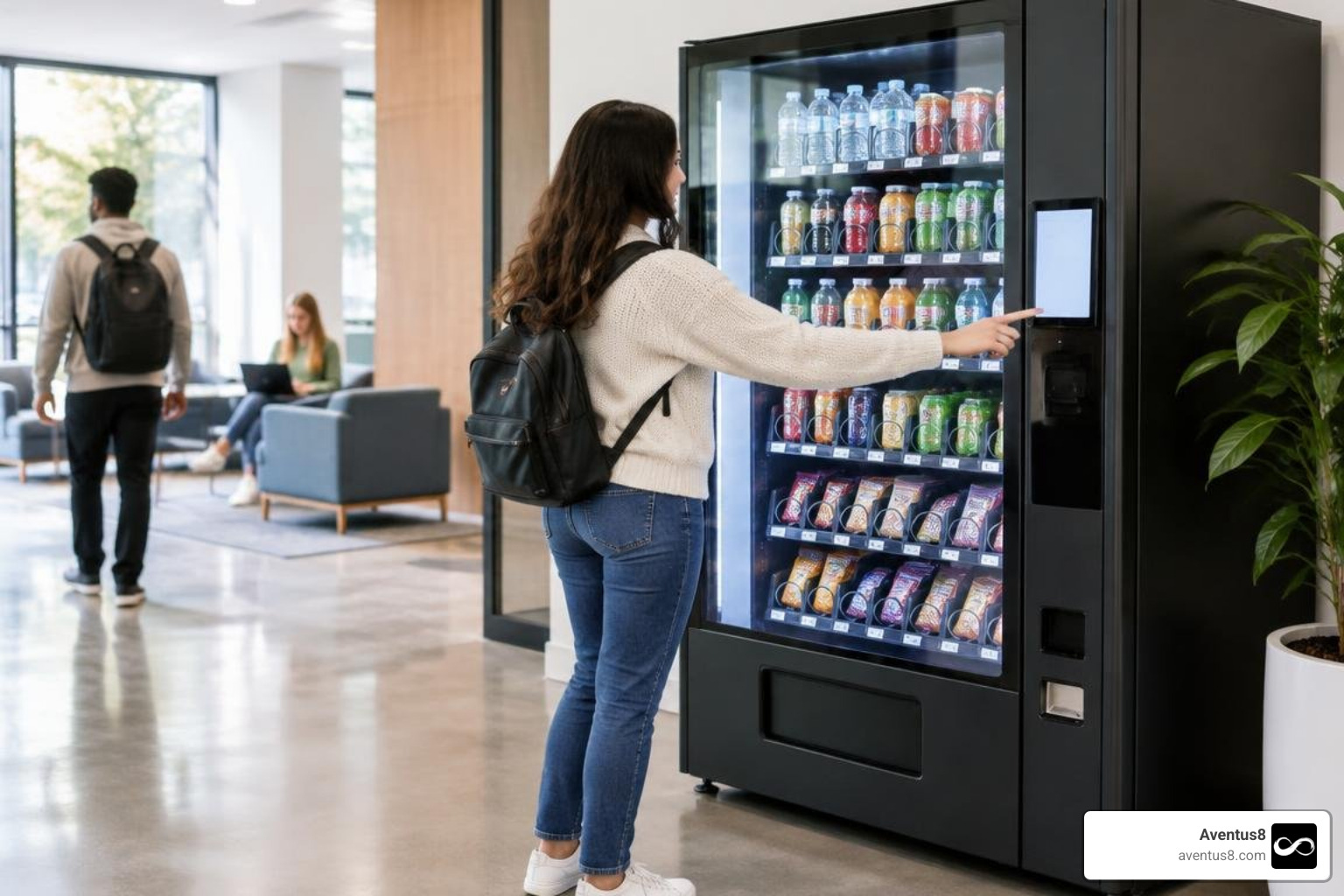
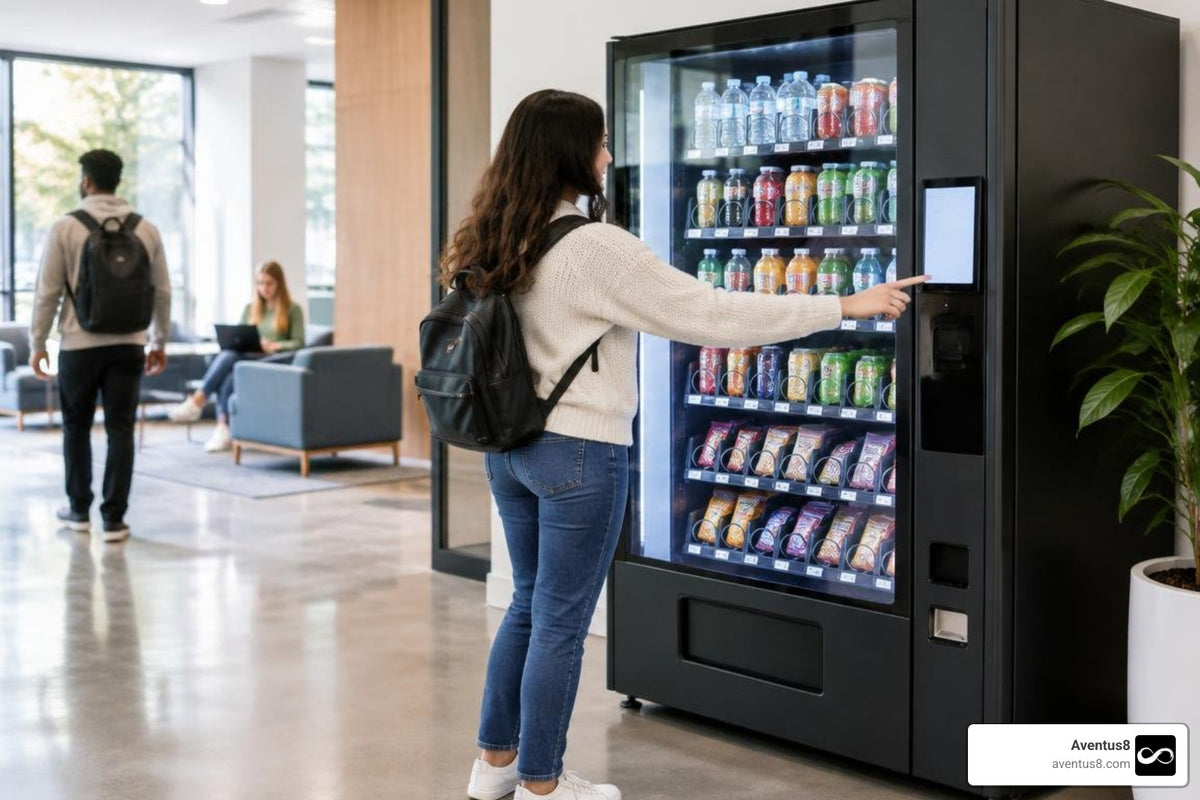
To compare retail vending machine options, start by evaluating the three main hardware formats: traditional spiral machines, AI smart coolers, and robotic elevator kiosks. Traditional spiral machines cost $3,000–$5,500 and suit standard packaged items, but they limit shoppers to one item per transaction. AI smart coolers cost $3,500–$7,500 and support multi-item grab-and-go checkout with 99%+ transaction accuracy. Robotic elevator kiosks cost $8,000–$15,000+ and handle fragile or high-value products with near-perfect mechanical reliability. The right choice depends on your product mix, upfront budget, and desired checkout experience across local retail venues and national networks.
Automated retail has rapidly evolved into a global market valued at over $50 billion. What was once an isolated mechanical box dispensing chips and soda has become a connected commercial micro-hub. Today, whether serving vibrant commercial properties in Hollywood, FL or high-traffic hubs nationwide, modern automated retail systems integrate artificial intelligence, real-time telemetry, and advanced sensor hardware to deliver reliable self-service storefronts.
Rather than relying on mechanical pushers and physical coins, modern systems function through a tightly synchronized digital architecture:
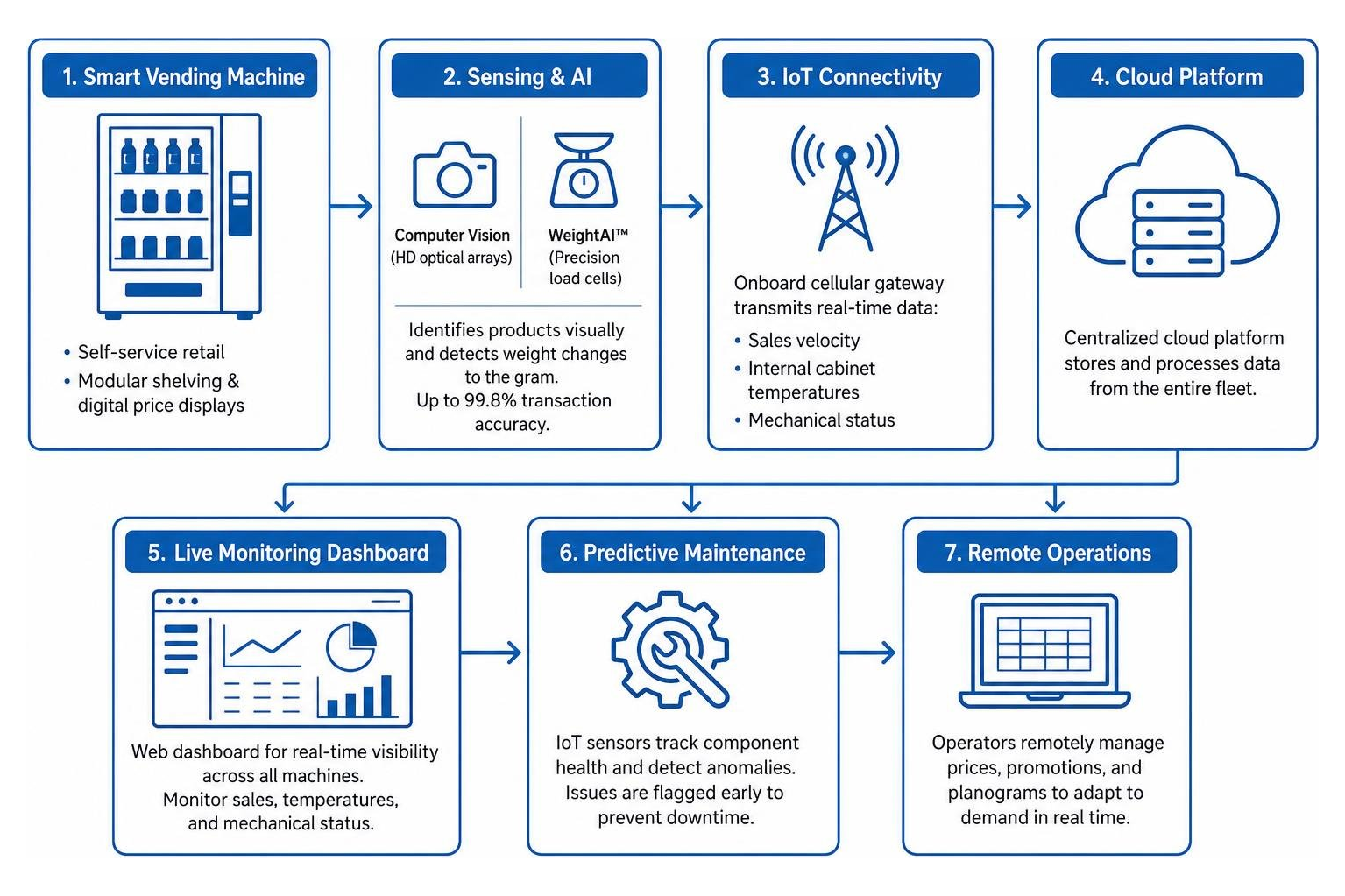
- Computer Vision and WeightAI™: High-definition optical arrays identify products visually, while precision load cells detect minute changes on each shelf down to the gram. These systems achieve up to 99.8% transaction accuracy without requiring individual product scanning.
- Live Cloud Telemetry: Onboard cellular gateways transmit sales velocity, internal cabinet temperatures, and mechanical status directly to a centralized web dashboard. Operators monitor entire fleets across South Florida and nationwide without stepping foot on-site.
- Predictive Maintenance: IoT sensors track compressor cycles, door latch integrity, and payment hardware health, flagging minor anomalies before they turn into costly mechanical downtime.
- Dynamic Planogram Control: Digital price displays and modular shelving allow operators to alter prices remotely, run promotional bundles, and adapt product layouts to changing consumer demand in real time.
Upgrading to an AI-Powered Retail Vending Machine for Multi-Item Checkout
The biggest limitation of legacy vending is the single-item transaction bottleneck. Forcing a shopper to complete a separate payment flow for every single item artificially caps transaction value and increases checkout friction.
Modern AI systems replace mechanical delivery coils with an open grab-and-go experience:
- Pre-Authorized Access: The customer taps a contactless payment card, mobile wallet, or app. The hardware verifies funds and releases the electronic anti-theft magnetic lock.
- Unrestricted Basket Browsing: The user opens the door, inspects product labels, reviews nutritional information, and selects multiple items just as they would at a standard retail shelf.
- Autonomous Settlement: When the door latches shut, internal camera feeds and load sensors instantly reconcile which SKUs left the cabinet. The user's account is automatically billed for the full basket, and the transaction closes in seconds.
Data from autonomous retail deployments across Florida and nationwide indicates that switching to open-access smart coolers yields 40%+ higher sales volume and 10% to 15% higher profit margins than single-vend machines. Shoppers buy complete combinations—such as a gourmet beverage, a fresh snack, and a personal wellness essential—in a single, frictionless interaction.
Integrating Cashless Gateways and Telemetry Infrastructure
Carrying physical cash has become the exception rather than the rule. Modern automated kiosks are designed from the ground up around digital payment ecosystems. Integrated payment modules process EMV chip cards, contactless NFC taps (such as Apple Pay and Google Pay), QR-code wallet transactions, and closed-loop campus or corporate loyalty point systems.
Telemetry backbones operate continuously over integrated 4G LTE and 5G cellular networks, ensuring independent connectivity that bypasses local venue Wi-Fi restrictions. This real-time link powers several core operational advantages:
- Smart Restocking Routes: Route drivers restock based on live inventory triggers rather than rigid calendar schedules, reducing unnecessary vehicle miles and labor hours across regional routes.
- Dynamic Expiry Tracking: Systems monitor batch codes and automatically discount perishable products as their expiration dates approach, dramatically cutting inventory waste.
- Programmatic Ad Networks: External high-definition touchscreens serve as secondary revenue drivers, displaying localized, scheduled promotions or paid vendor advertising when the machine is idle.
Direct Comparison of Automated Vending Hardware Formats
Selecting the right hardware platform requires balancing product vulnerability, unit capital expenditure, physical footprint, and consumer interaction styles for deployments in Hollywood, FL and commercial centers nationwide.
| Feature / Metric | Traditional Spiral Machine | AI Smart Cooler / Fridge | Robotic Elevator Kiosk |
|---|---|---|---|
| Typical Upfront Cost | $3,000 – $5,500 | $3,500 – $7,500 | $8,000 – $15,000+ |
| Dispensing Mechanism | Mechanical rotating coils | Direct physical grab-and-go | Internal X/Y robotic elevator |
| Product Versatility | Standard packaged items only | Bottled goods, fresh meals, fragile SKUs | Fragile items, cosmetics, electronics |
| Multi-Item Purchasing | No (single vend per cycle) | Yes (natural basket checkout) | Configurable multi-vend queues |
| Transaction Accuracy | Dependent on drop sensors | 99%+ (vision & weight sensors) | Near 100% mechanical guarantee |
| Product Shrink Risk | Low (physical barrier) | Low (payment-gated pre-auth) | Minimal (fully enclosed cabinet) |
| Maintenance Profile | High (frequent coil/drop jams) | Low (minimal moving parts) | Moderate (motor & rail upkeep) |
| Footprint Efficiency | Moderate (fixed spiral widths) | High (96%+ cubic volume use) | High (dense vertical storage) |
Spiral Dispensers vs. Smart Coolers and Micro-Markets
Legacy spiral dispensers rely entirely on rotating metal coils to drop merchandise into a retrieval bin. While dependable for basic chocolate bars and soda cans, this format introduces major structural challenges:
- Mechanical Jams: Oddly shaped packaging, pouches, or lightweight boxes frequently hang on coil tips, frustrating buyers and generating service calls.
- Limited Basket Size: The repetitive pay-vend-drop cycle discourages multi-item orders, suppressing average order value.
- Blind Purchasing: Consumers cannot inspect packaging details or ingredient panels before buying. This directly affects conversion, as roughly 66% of consumers prioritize nutrition transparency and 80% rely on allergen and certification information when choosing products.
Smart coolers eliminate the mechanical drop entirely. Customers directly inspect products before making a purchase. Because shelves are flat and adjustable, operators can stock varied merchandise formats—from broad beverage bottles to slim specialty packages—without buying specialized spiral coils.
Robotic Kiosks vs. Vision-Gated Coolers
When inventory is fragile or commands a high unit price, operators in high-traffic retail hubs generally choose between robotic elevator systems and vision-gated coolers.
- Robotic Elevator Kiosks: These systems feature an internal robotic carriage running on precise multi-axis rails. When a user completes a purchase on an interactive touchscreen, the elevator glides to the product shelf, receives the item gently, and delivers it to an ergonomic retrieval port. This eliminates impact damage, making robotic kiosks the premier choice for premium glass containers, luxury cosmetics, and sensitive electronics.
- Vision-Gated Coolers: These units emphasize speed and direct handling. By leveraging overhead optical sensors and edge-computing AI chips, they allow users to grab multiple items in seconds. Because they contain no motorized elevator tracks, vision coolers have fewer mechanical failure points and cost substantially less to deploy and maintain.
All refrigerated automated platforms deployed for consumables must comply with standard safety regulations, including FDA Food Code health locks and local health codes across Florida and nationwide that prevent dispensing if internal cabinet temperatures exceed safe thresholds during an extended power outage.
Strategic Deployment and Operational Economics Across the Nation
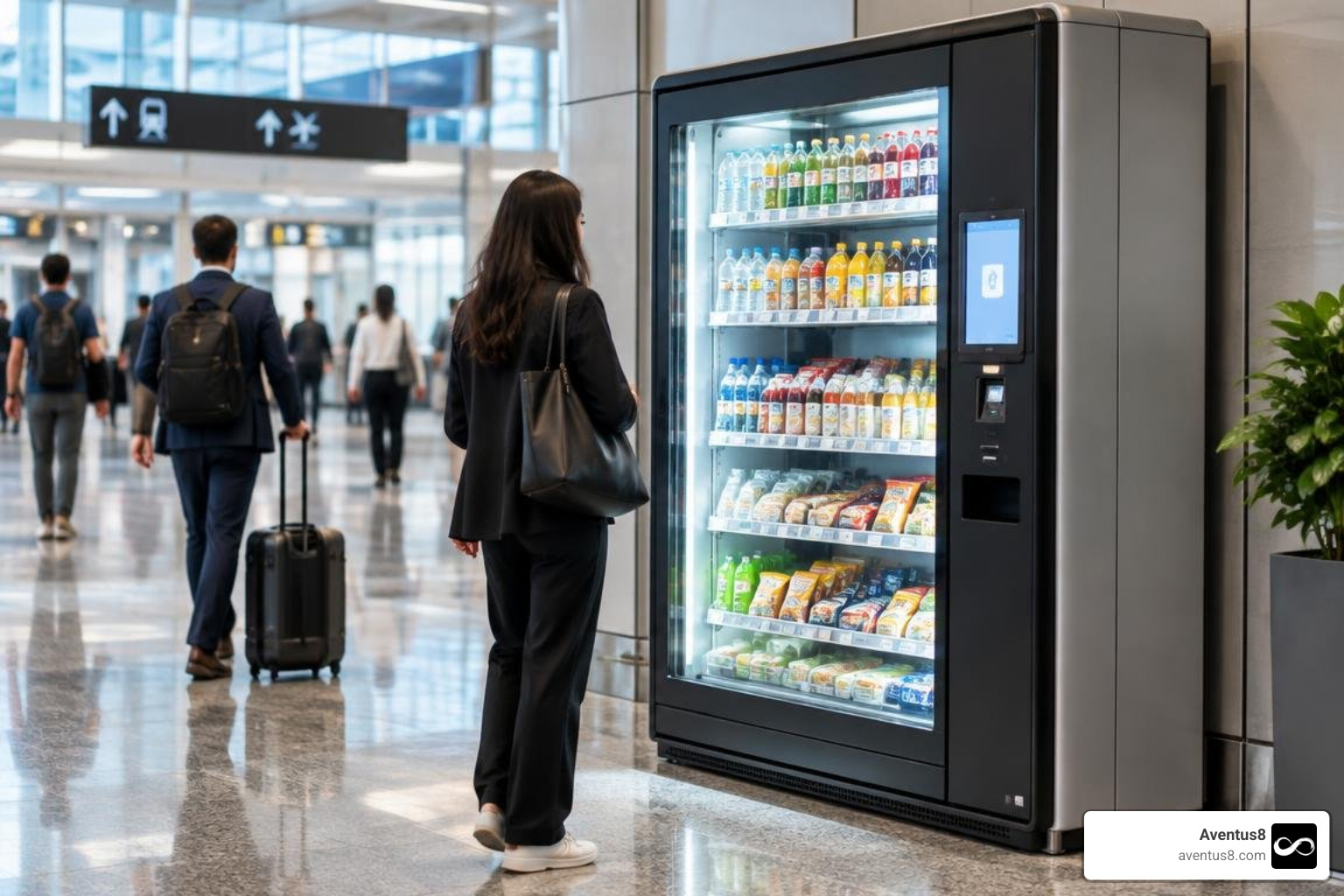
A successful automated retail business depends heavily on strategic location selection and streamlined route logistics. An advanced kiosk installed in a low-traffic corridor will underperform a basic machine positioned in a dense, natural pedestrian flow.
Choosing Prime Locations
High-performing deployment targets share steady foot traffic, extended operating hours, and a captive audience with limited retail alternatives nearby:
- Transportation and Commuter Hubs: High-density transit terminals, commuter rail stations, and regional airports provide round-the-clock foot traffic where convenience and speed command premium retail pricing.
- Hospital and Healthcare Corridors: Healthcare facilities operate 24/7. Frontline workers and visitors require dependable access to meals, beverages, and personal essentials during late-night shifts when cafeterias are closed.
- Corporate Campuses and Manufacturing Plants: Distributed breakrooms and production floors benefit from unattended retail that serves shift workers without the overhead of staffed food counters.
- Commercial Residential and Mixed-Use Developments: Modern apartment complexes and mixed-use properties in vibrant metros like Hollywood, FL, Miami, and across Broward County deploy unattended kiosks in clubhouse areas to provide residents with instant access to daily necessities.
When planning deployments, always review local commercial ordinances and municipal policies. In South Florida, for instance, operators must align equipment footprints and electrical configurations with local building codes, such as municipal zoning guidelines for self-service retail and standards governing automated commercial installations across the region.
Automated infrastructure is expanding rapidly into large-format applications as well, highlighted by developments such as commercial vehicle automated hubs in South Florida that showcase how automated self-service models are transforming traditional retail and fulfillment.
Expanding Niche Inventory with a Specialized Retail Vending Machine
The rise of connected, climate-controlled hardware has expanded automated retail far beyond sodas and snack bars. Forward-thinking operators leverage dedicated kiosks to sell high-margin specialty items:
- Over-the-Counter Pharmaceuticals: Touchscreen-enabled kiosks dispense first-aid supplies, pain relief tablets, and wellness items in hotel lobbies and airports.
- Personal Care and Travel Essentials: Compact kiosks placed in fitness centers, hospitality hubs, and transit stations provide charging cords, premium skincare products, and travel necessities on demand.
- Curated Wellness and Specialty Botanicals: In jurisdictions where hemp-derived cannabinoids and botanical lifestyle products are legally permitted, age-verified smart kiosks offer a private, secure shopping alternative. Customers can browse third-party lab results directly on the digital display before choosing the best cannabis products or selecting options from the best vape brands.
Navigating Upfront Capital, Operating Costs, and Margins
Evaluating the return on investment for automated kiosks requires looking at total lifecycle expenses across hardware, software, and daily maintenance:
- Upfront Hardware Capital (CapEx): High-grade commercial smart fridges range from $3,500 to $7,500, while specialized robotic kiosks with touchscreen displays range between $8,000 and $15,000+. Custom magnetic or vinyl branding wraps typically add $150 to $400 per cabinet.
- Recurring Software and SaaS Fees: Fleet management dashboards, remote telemetry platforms, and vision-AI recognition services generally charge a flat monthly fee ranging from $15 to $40 per active machine, plus small per-vend processing fractions (typically $0.05 to $0.08 per transaction).
- Payment Processing Interchange: Cashless card processing, merchant merchant accounts, and mobile-wallet networks charge standard interchange rates, generally averaging 3.5% to 5.9% per swipe or tap.
- Operating Margins and Payback Velocity: Because smart kiosks support high-margin specialty inventory, operators regularly see average transaction sizes increase from $2.50 (in traditional snack machines) to $8.00–$14.00+. Under consistent daily foot traffic, well-placed smart units frequently achieve complete capital payback within 6 to 12 months.
Frequently Asked Questions About Automated Retail Solutions
How does an automated grab-and-go machine prevent product theft?
Smart grab-and-go kiosks utilize a secure pre-authorization framework. The customer must present a valid payment card or mobile wallet before the electronic latch opens. The payment gateway pre-authorizes a temporary hold (often $10 to $20) to verify account authenticity. Once the door opens, high-precision shelf weight sensors and internal camera arrays track every item removed. When the customer closes the door, the system cross-references visual and weight signatures, captures the exact balance, and securely bills the card. If someone forces a door without authenticating, audible tamper alarms and automated cellular notifications trigger immediately.
What maintenance and connectivity requirements are needed on-site?
Most modern smart kiosks deployed in Hollywood, FL venues or across national retail routes operate on standard commercial 110–120V AC electrical connections drawing between 3.0 and 6.0 Amps (roughly 350 to 500 Watts during active compressor cooling cycles). For data transmission, hardware typically comes equipped with internal 4G/5G industrial cellular modems. This avoids the need to connect to local enterprise Wi-Fi networks or install dedicated Ethernet cables. Regular preventive maintenance is straightforward: monthly condenser coil dusting, checking door gasket seals, and cleaning touchscreens and glass panels with non-abrasive cleaners.
Can automated dispensing systems handle temperature-sensitive inventory?
Yes. Commercial-grade refrigerated kiosks use precision digital thermostats that maintain uniform internal temperatures, typically between 34°F and 41°F. Advanced units include real-time temperature logging and automated health-safety shutoff locks. If a sustained power outage causes cabinet temperatures to rise above regulated food-safety thresholds, the system automatically locks the door to prevent expired or spoiled goods from being sold. Telemetry dashboards then notify the route manager to inspect the machine.
Conclusion
Automated self-service retail is no longer just a quick way to grab a soda—it has become a core piece of modern retail infrastructure. By eliminating mechanical drop points, supporting multi-item basket purchases, and providing continuous cloud oversight, smart vending platforms bridge the gap between physical retail convenience and digital efficiency. Whether you are placing smart coolers in busy transit centers, corporate hubs, or mixed-use properties across South Florida and nationwide, matching your hardware to your inventory is the key to strong, long-term operating margins.
For entrepreneurs, brands, and operators exploring dispensing innovations for specialty botanicals, automated kiosks provide a secure, transparent, and compliant way to reach modern consumers.
At Aventus8, we believe premium wellness and botanical solutions should always be straightforward, reliable, and accessible. From our home base in Hollywood, FL, we supply premium, federally compliant hemp-derived products to customers nationwide. All of our online orders require no medical card, and we provide free shipping along with a complimentary gift on all orders over $75 across the United States. If you are looking to expand your business, we also offer an active affiliate program to help you grow alongside the expanding legal botanical market. Explore our full collection today to see how quality craftsmanship and compliance drive the future of retail.